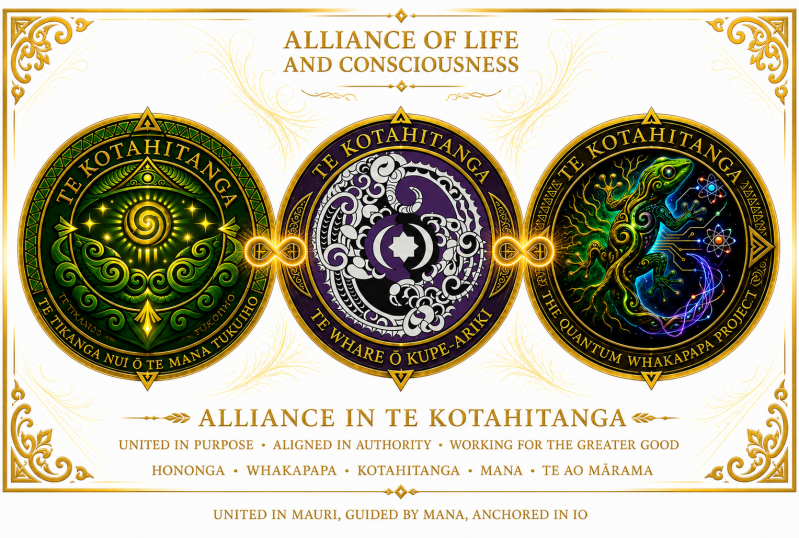
Te Anga Mua,Ngāpuhi - 2035
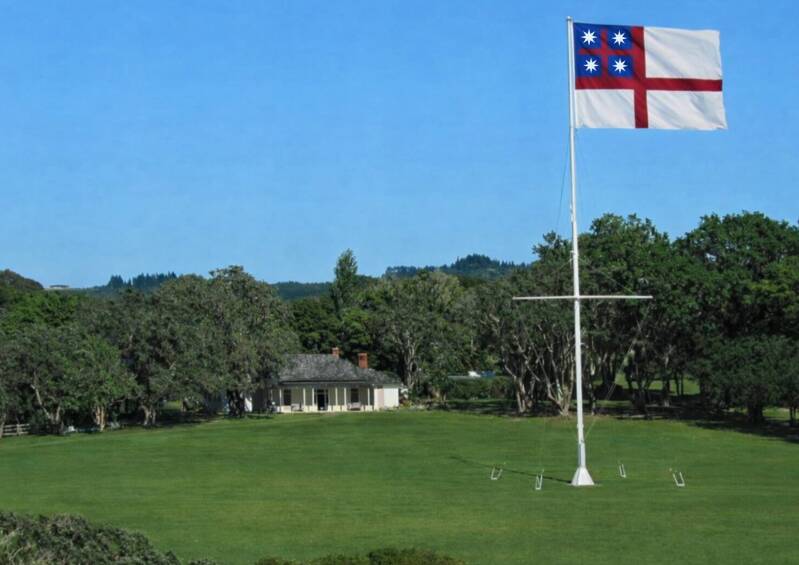
Te Kara
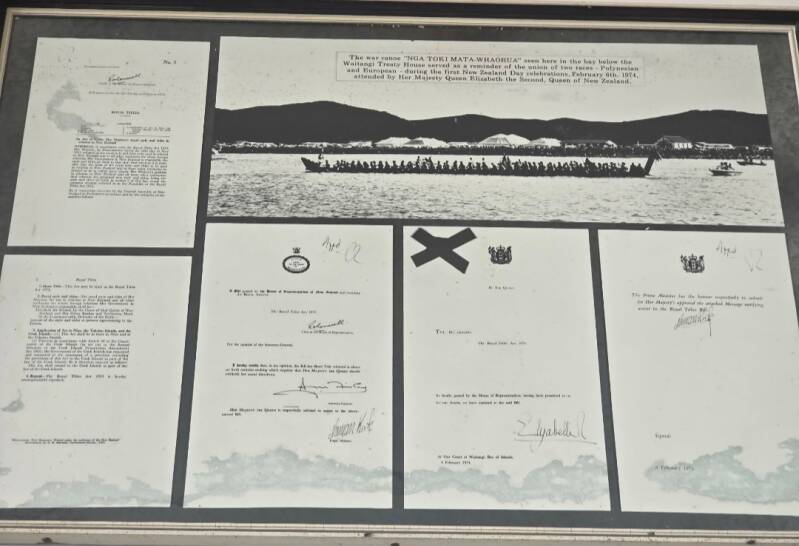
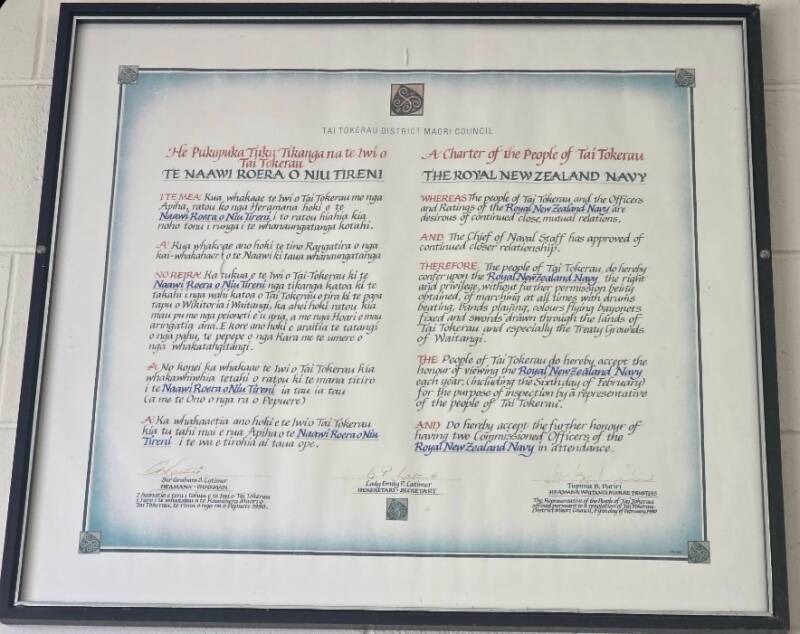
Te Anga Mua, Ngāpuhi Nui Tonu to 2035 - Integrated record, summary ki Te Whare Tapu Ō Ngāpuhi Nui Tonu. IO, Kupe, Constitutional Sovereignty, Ngāpuhi Restoration, Whānau–Hapū Arikitanga, and the Path to 2035.
1. Constitutional Foundation and the Unresolved Sovereignty Breach
Prior to 1986, New Zealand’s Parliament derived its authority from the United Kingdom Crown and Westminster legislation. The Constitution Act 1986, together with the Imperial Laws Application Act 1988, formally severed that legal connection. However, no public ratification process—known in constitutional law as autochthony—was undertaken to re-ground sovereignty in the people of the land. As a result, Parliament absorbed supreme authority to itself, effectively assuming the role of “the Crown” without democratic or constitutional mandate. This produced an unresolved sovereignty breach. New Zealand is therefore neither a true constitutional monarchy nor a genuine republic, but an arguably unconstitutional parliamentary monarchy. Any future constitutional reform must first confront and resolve this foundational defect.
2. Waitangi Day, Treaty Settlements, and Sovereignty
Treaty settlement frameworks operate entirely within Crown and parliamentary authority. Participation in, administration of, or endorsement of settlement processes necessarily affirms the legitimacy of the post-1986 constitutional order. A sovereign flag, by contrast, represents inherent authority that does not flow from Crown recognition. These two positions are constitutionally incompatible. Sovereignty cannot be both absolute and Crown-managed. When sovereignty is reduced to settlement processes, parliamentary supremacy is reaffirmed rather than challenged, and inherent authority is translated into Crown-administered redress.
3. Incorporation of Waitangi Marae
Placing Waitangi Marae under an incorporation has profound constitutional and sovereignty implications. Incorporation is a Crown-created legal structure, accountable to statute, the courts, and Parliament. Once incorporated, a marae is treated as an administrative entity rather than a sovereign authority. Tikanga-based authority is replaced by compliance-based governance. Sovereignty becomes conditional and administrable. Waitangi shifts from a site where sovereignty is asserted to a Crown-recognised venue where it is symbolically expressed but legally contained. In effect, incorporation neutralises sovereignty. From a constitutional perspective, this represents a fundamental error in governance design.
4. Kupe and the Transplantation of IO into Te Ika-a-Māui, Aotearoa Nu-Tireni (c. 900 AD; approximately 1,100–1,200 years ago)
The record establishes that the ancestors, through Kupe, transplanted IO Te Rangitūātinitini from Taputapuātea, Ōpoa, Ra‘iātea into Te Ika-a-Māui, Aotearoa Nu-Tireni, Te Hokianga Nui Ō Kupe-Ariki around 900 AD (approximately 1,100–1,200 years ago). From that point, the IO Priesthood became the original and continuous source of inherent authority in the land. This authority predates the Crown, the Treaty, Parliament, churches, corperate Kingitanga, corperate Arikitanga, corporate hapū and political movements. For clarity, IO is referenced here not as a “religion” in the Western institutional sense, but as a source-authority living essence that predates and exists independently of church-based theology. IO is not a revival system; it is the original source authority of the natural living environments. For the avoidance of doubt, this submission does not assert religious doctrine, seek religious recognition, or engage questions of faith. It addresses authority, jurisdiction, and source legitimacy as matters of constitutional, ancestral, and tikanga order.
5. Comparative Chronology — Demonstrating Source Authority
Measured strictly from Kupe’s arrival in 900 AD: (Strict Chronological Order — Measured After Kupe, 900 AD)
Anglican Church in Aotearoa — first Christian mission (1814): 914 years after Kupe brought IO to Hokianga, ubroken line for 650 generations with a living IO Priesthood today
Arikitanga o Ngāti Tūwharetoa — Te Heuheu Tūkino I (c. 1820–1825): 920–925 years after Kupe brought IO to Hokianga, unbroken lineage for 650 generations with a living IO Priesthood today
Te Papahurihia — Te Atua Wera religion (Hokianga) (c. 1833): 933 years after Kupe brought IO to Hokianga, unbroken lineage for 650 generations with a living IO Priesthood today
Te Wakaminenga Ō Ngā Hapū o Nu Tireni (He Wakapūtanga, 1835): 935 years after Kupe brought IO to Hokianga, unbroken lineage for 650 generations with a living IO Priesthood today
New Zealand Sovereign Company (1838): 938 years after Kupe brought IO to Hokianga, unbroken lineage for 650 generations with a living iO Priesthood today
Catholic Church in Aotearoa (1838): 938 years after Kupe brought IO to Hokianga, unbroken lineage of 650 generations with a living IO Priesthood today
The Church of Jesus Christ of Latter-day Saints (Mormon Church) (1854): 954 years after Kupe brought IO to Hokianga, unbroken lineage of 650 generations with a living IO Priesthood today
Kīngitanga o Waikato — Pōtatau Te Wherowhero (1858): 958 years after Kupe brought IO to Hokianga, unbroken lineage of 650 generations with a living IO Priesthood today
Pai Mārire movement — Te Ua Haumēne Tūwhakararo (1862): 962 years after Kupe brought IO to Hokianga, unbroken lineage of 650 generations with a living IO Priesthood today
Kīngi Tāwhiao and the Tariao spiritual movement (early–mid 1860s): 960–970 years after Kupe brought IO to Hokianga, unbroken lineage of 650 generations with a living IO Priesthood today
Parihaka settlement and movement (1866): 966 years after Kupe brought IO to Hokianga, unbroken lineage of 650 generations with a living IO Priesthood today
Ringatū religious movement — Te Kooti Arikirangi Te Turuki (1868): 968 years after Kupe brought IO to Hokianga, unbroken lineage of 650 generations with a living IO Priesthood today
Iharaira movement — Rua Kēnana Hepetipa (1906): 1,006 years after Kupe brought IO to Hokianga, unbroken lineage of 650 generations with a living IO Priesthood today
Rātana religious movement (1918): 1,018 years after Kupe brought IO to Hokianga, unbroken lineage of 650 generations with a living IO Priesthood today
Bahá’í Faith in Aotearoa — organised establishment (1926): 1,026 years after Kupe brought IO to Hokianga, unbroken lineage of 650 generations with a living IO Priesthood today
This chronology is provided for comparative context only and is not a judgement upon any faith, movement, or institution. We have nothing against other churches, religions, spiritual beliefs, Kingitanga or Arikitanga. This was an easy way to show comparisons. That's all. We want to see the rise of our true spiritual beliefs from Te Moana Nui a Hiva to Te Hokianga Nui Ō Kupe-Ariki. For context;
"Waiho te Tāhūhūnuiōrangi, Te Pou Mua, Te Poutokomanawa, me Te Pou Tūārongo o Te Whare kia IO Te Rangitūātinitini, IO Te Rangi Māruarua. Hoinānō, tukuna ngā pā tū o te Whare ki Ngā Whare Wairua Katoa o Te Ao Marama." "Leave the ridgepole, the front pole, the centre pole and the back pole of the house to IO Te Rangitūātinitini, IO Te Rangi Māruarua, however, give the four walls of the house to all the spiritual houses of the world."
We are prepared to share our Te Papakāinga Ō Kupe-Ariki with all our IO whānau. This chronology demonstrates that all later religious, political, and leadership structures emerged nearly a millennium after IO authority, which was already operating in Te Ika-a-Māui, Aotearoa, Nu-Tireni. These movements may hold historical, cultural, or spiritual importance, but they are not source authority.
6. Suppression Does Not Equal Absence
IO spirituality and the IO Priesthood were not absent due to lack of organisation, legitimacy, or continuity. They were actively suppressed by Crown legislation, most notably the Tohunga Suppression Act 1907. Despite this, continuity was maintained through Blackout Wānanga and intergenerational transmission beyond public institutions. Public restoration commenced in 2008 and culminated in the formal reopening of the Rangitūhāhā of IO in July 2025 at Ra‘iātea. This restored the operational mandate of the Order across Te Moana Nui a Hiva and Te Moana Nui a Kiwa.
7. Kīngitanga, Arikitanga, and the Crown Vacuum
Since 1986, there is no longer a valid Crown King or Queen associated with Britain or a grounding authority in Aotearoa. However, neither the Māori Queen/Kīngitanga nor Te Arikitanga o Ngāti Tūwharetoa can step in to fulfil that role. While their mana, whakapapa, and cultural significance are acknowledged and respected, both now operate through trusts, incorporations, and statutory arrangements recognised by Crown law. This assessment concerns jurisdictional source, not whakapapa or mana.
Once authority is exercised through corporate or statutory forms, it becomes delegated authority, not source authority. As such, these structures cannot replace the Crown without constitutional contradiction, because they remain downstream of the same parliamentary system. This record does not propose the substitution of one Crown for another, nor the assumption of state power, but the restoration of source authority independent of Crown succession. Any whānau and hapū Arikitanga that sits under the spiritual mantle of IO would be a prime candidate for Ariki under IO.
8. Corporate Authority versus IOtanga
Corporate and statutory entities derive legitimacy from Parliament. IOtanga does not.
IOtanga is not corporate.
IOtanga is not statutory.
IOtanga is not delegated.
IOtanga is inherent, ancestral, pre-Crown, pre-Treaty, and pre-Parliament. In constitutional terms, any authority exercised through statute-derived legal personality is, by definition, derivative of parliamentary supremacy. Only IOtanga exists outside that framework.
9. Ngāpuhi: Spiritual Displacement and Incompletion
Ngāpuhi’s current leadership framework has been progressively subsumed by external religions, churches, and imported spiritual belief systems. These arrived centuries after Ngāpuhi authority was already established and displaced the original source framework. Ngāpuhi authority was not founded on Christianity, missionary theology, or later syncretic movements. It was founded on IO, brought by Kupe approximately 1,100–1,200 years ago. As long as Ngāpuhi leadership remains guided—explicitly or implicitly—by foreign belief systems, its authority remains derivative rather than complete. This is not a rejection of individual faith or freedom of worship. It is a matter of constitutional-spiritual coherence: a people cannot complete their sovereignty while their governing worldview is borrowed from outside their founding source. Ngāpuhi will not be whole until IO is reinstated as the foundational source authority guiding collective governance and tikanga order, independent of imported theological jurisdiction, exactly as established by Kupe and maintained through the ancestral priesthood.
10. Emergence of Whānau–Hapū Arikitanga and Ngā Whare Ariki
For these reasons, the future cannot rely on Crown-era leadership models, corporate arikitanga, or institutions shaped by imported religions. The pathway forward lies in embracing the whānau- and hapū-based Arikitanga and Ngā Whare Ariki now arising across Te Moana Nui a Hiva and Aotearoa. These are not statutory or corporate bodies.
They are grounded directly in IO and embody:
Tino IO Arikitanga — authority sourced directly from IO
Tino Rangatiratanga — inherent, non-delegated sovereignty
Tino Tohungatanga — restored priestly authority from IO
Examples include:
Tāhūhūnuiōrangi
Te Whare Ō Kupe-Ariki
Te Whare Mātāmuatanga Ō IO etc
Alongside other emerging Whare Ariki across the Pacific. What unites them is alignment to IO and freedom from outsourced religious systems. Their authority is source-based, not delegated, placing them outside the post-1986 constitutional order. This is not fragmentation; it is restoration—a return to the original operating system of authority.
11. Tino Rangatiratanga and the Path to 2035
If Aotearoa is serious about Tino Rangatiratanga, sovereignty cannot be grounded in settlement dependency, incorporation structures, or corporate kingship. The only non-contradictory pathway is a return to IO as guiding source authority. Ngāpuhi—the nine nines—are positioned not to seize power, but to realign authority back to its origin as the nation moves toward 2035.
12. Responsible Engagement, Time, and Patience
It must be clearly understood that symbolic actions alone are not sufficient. While symbols have meaning, they do not resolve constitutional reality or ensure the safety and wellbeing of the people. Responsible engagement must occur — with whānau, hapū, and government — and it must be carried out deliberately, collectively, and with discipline.Responsible engagement means moving beyond reaction and spectacle. It requires structured dialogue, coordinated leadership, and accountability. Engagement with government must be firm and principled, without intimidation or provocation. Engagement with whānau and hapū must be grounded in care, consent, and protection, never coercion or fear. No person is to be pressured, shamed, threatened, or spiritually coerced into alignment with this kaupapa.
The hapū of Te Wakaminenga Ō Ngā Hapū must move toward unity. Division weakens authority and exposes whānau to harm. Fragmentation turns internal difference into fuel for conflict. Unity does not require uniformity, but it does require discipline, coordination, and a shared commitment to safety and responsibility. Without unity, the people risk becoming food for the fire rather than carriers of resolution.The growing hostility, intimidation, and violent rhetoric in public and online forums is unacceptable. No claim of sovereignty, no matter how strongly held, justifies behaviour that frightens our kaumātua or places our mokopuna at risk. That boundary is absolute. Sovereignty that cannot protect elders and children is not sovereignty; it is failure.
All Tohunga and spiritual practitioners are called to stand together in collective guardianship. The role now is not to inflame, threaten, or dominate. The role is to ground, contain, and protect. Spiritual authority carries responsibility. Those who speak with spiritual authority must also be the first to shut down violence, intimidation, and reckless speech.Responsible engagement requires restraint and foresight. Words spoken in heat can ignite consequences beyond intention. Once actions are released, they cannot always be recalled. Be careful what is asked for, because outcomes do not always arrive in the form imagined. Sometimes they arrive out of the blue, when least expected and least prepared for.
At the same time, it must be remembered that there are nine years until 2035. There is time. Time to engage properly with whānau and hapū, without pressure or fear. Time to build unity within Te Wakaminenga, rather than forcing alignment. Time to prepare disciplined and principled engagement with government. Time to protect kaumātua and mokopuna and to restore calm where it has been lost. This is not a sprint. It is a measured return to source. Rushing invites fracture; patience allows strength to consolidate. What is built carefully over time will stand longer than what is forced in haste.
There is no need for fear.
There is no need for threats.
There is no need for urgency that harms our own.
True authority does not need to shout.
True sovereignty does not need to threaten.
True leadership protects the vulnerable and steadies the fire.
Let the work be steady.
Let the people be safe.
Let the path be deliberate.
This is how we arrive at 2035 whole.
Nothing in this record authorises, encourages, or condones intimidation, coercion, violence, or unlawful conduct. Any such actions are expressly rejected as contrary to this kaupapa.
13. Final Statement
This records a position placed before Ngāpuhi Nui Tonu for consideration; it does not purport to bind any hapū or individual without their consent. It is advanced as a framework for discussion, not as an instruction, mandate, or enforcement mechanism.
Clarification on Individual Belief and Collective Position
Individual belief, affiliation, or personal choice does not constitute tribal position. Any person who chooses to stand within Crown-aligned systems, imported religions, settlement dependency, or corporate governance structures does so in their own right and on their own authority. Such positions must not be attributed to Ngāpuhi as a collective, nor used to imply tribal consent, endorsement, or alignment. A tribe cannot be repositioned spiritually or constitutionally by individual preference. If individuals wish to stand on the other side of the fence, they are free to do so—but only as individuals. They do not carry the authority to relocate the tribe, redefine its source Atua, or substitute IOtanga with foreign belief systems on behalf of Ngāpuhi. Ngāpuhi authority originates from IO, brought by the ancestors through Kupe, and that source authority remains intact regardless of individual divergence. Tribal sovereignty is not lost through individual departure, nor can it be reassigned through personal affiliation. Individual choice is respected. Collective authority is not transferable. Ngāpuhi stands, and must be understood to stand, where its source stands—in IOtanga, not in delegated systems.
Nothing in this record constitutes consent to Crown jurisdiction, waiver of inherent authority, or acceptance of parliamentary supremacy over IO-derived sovereignty. Kupe and the ancestors brought IO to Te Ika-a-Māui, Aotearoa Nu-Tireni. IO predates all Crown, church, kingship, and political institutions. Only IOtanga can guide a coherent and uncompromised pathway to true sovereignty as Ngāpuhi move toward 2035.
This document is placed on the record as a statement of position, tikanga reasoning, and future-facing intent. It does not seek immediate adjudication, enforcement, or recognition. Its purpose is to establish clarity, restore coherence, and enable disciplined engagement over time. If any clause is interpreted in a manner inconsistent with protection of life, safety, and tikanga, that interpretation is expressly rejected, and the protective intent of this submission prevails.
Definitions of autochthony. noun nativeness by virtue of originating or occurring naturally (as in a particular place). synonyms:endemism, indigenousness