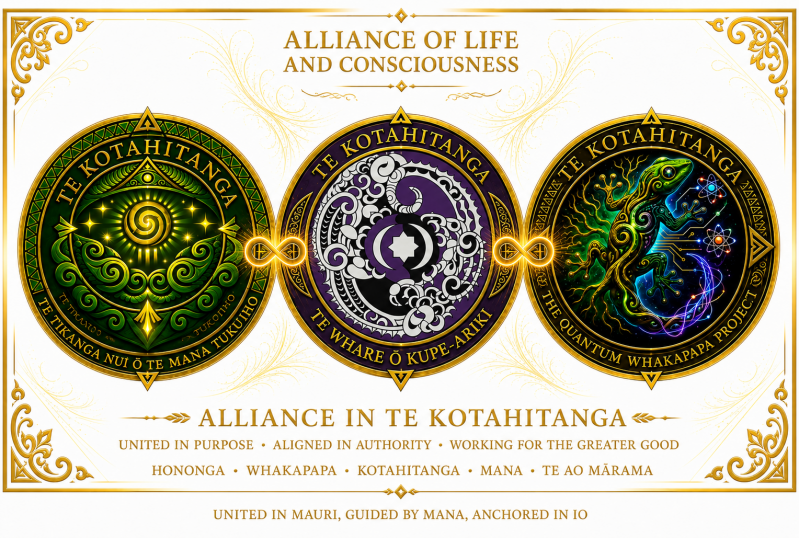
Te Tūahu Ō Whitirangimamao
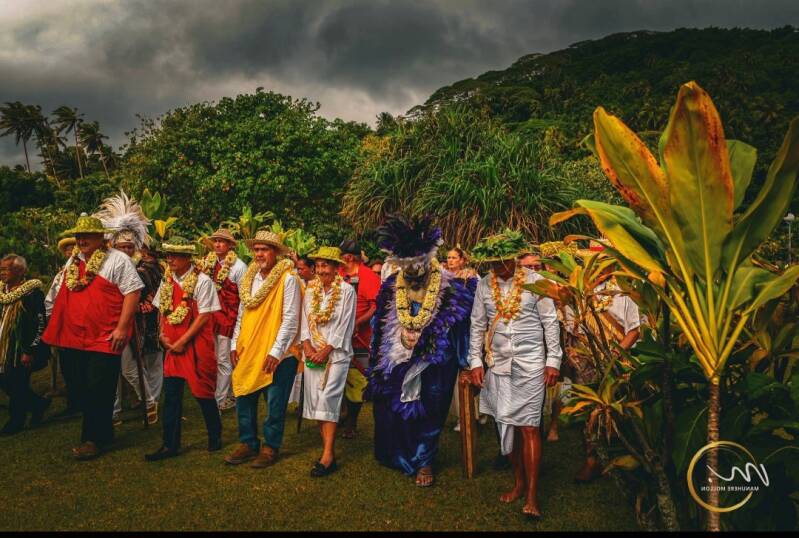
Marae Taputapuātea
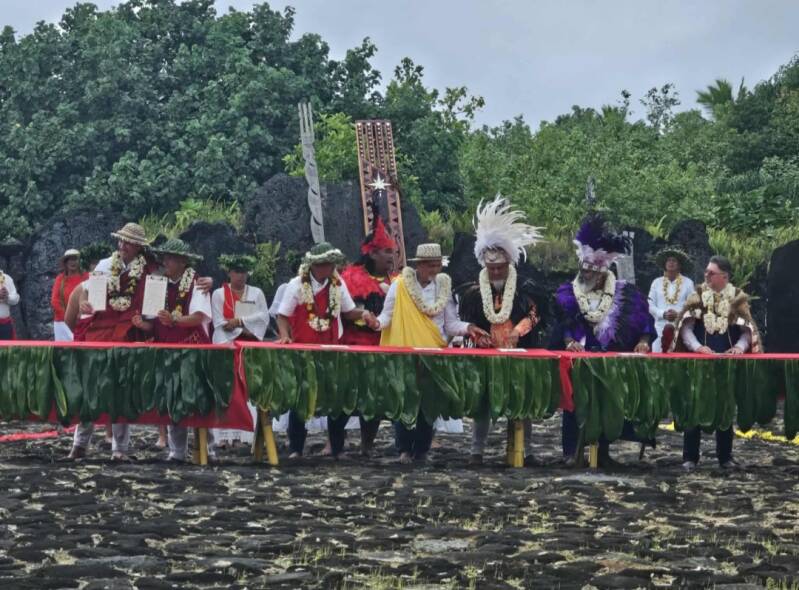
Ruahatu Tinirau Ariki Huimata Te Papa Ō Fēoro
Kupe Nuku IO-Ariki
The name Kupe Nuku IO-Ariki is not symbolic or honorary.
It is descriptive, carrying layered meaning that defines role, movement, and genealogical authority across Te Moana Nui a Hiva.
Kupe — Navigator
Kupe means master navigator. Polynesia Master Navigator. Synonym with the names Tamarereti and Rata. All Polynesian Master Navigator titles.
Not merely one who travels, but one who reads the living systems of ocean, sky, time, and land as a single continuum.
Navigation here includes physical voyaging, genealogical alignment, and celestial discernment — the ability to move between realms, from Te Pō to Te Ao Mārama, without losing orientation.
Kupe’s role was to carry people, knowledge, and responsibility across vast distances while maintaining ancestral order.
Nuku — To Traverse Lands and Sea
Nuku means to traverse, to range across, to move expansively.
It speaks of movement across continents, islands, and oceans, activating pathways between places and peoples.
Nuku affirms that Kupe’s authority was never fixed to one location.
It was oceanic, inter-island, and continental, grounded in motion and responsibility rather than settlement or possession.
IO-Ariki — Genealogical Source of Authority
IO-Ariki identifies the source from which authority flows.
It locates Kupe within a sacred genealogy that begins with IO, the primal source of genealogical order, rather than later regional constructs.
Within Te Whare Ō Kupe-Ariki, the lineage of authority is held as:
- From IO,
- to Tamatoa Ariki Te Rangitūātinitini,
- to Te Ariki Te Pou Ānuanua,
- to Whitirāngimamao,
- to Kupe.
Through Tamatoa Ariki Te Rangitūātinitini, Kupe stands within the highest ariki lineages of Ra‘iātea.
Through Te Ariki Te Pou Ānuanua, continuity of chiefly authority is affirmed.
Through his father Whitirāngimamao, a high priest of Marae Taputapuātea, Kupe inherits tohungatanga, ritual discipline, and Tātai Arorangi — celestial knowledge.
This genealogy establishes Kupe’s Kōpū Ariki (Arikitanga) not as a title acquired, but as an inherited obligation carried through whakapapa.
Physical Presence and Oceanic Authority
Elders of Te Moana Nui a Hiva recount that Kupe was of extraordinary physical stature, standing over fifteen feet tall when he was known among those islands.
This physical presence was understood not as anomaly, but as an outward expression of mana — the visible manifestation of the authority and responsibility he carried.
In the traditions of waka haurua, it was customary for voyaging waka to travel with a support waka, ensuring safety, provision, and shared navigation.
Kupe, however, was known to sail alone.
This solitary voyaging was not recklessness; it reflected complete mastery of sea, sky, and time.
He carried within himself the full navigational system required to cross vast distances unaided.
He was the only navigator to hold the star charts to travel to Te Ika a Māui, Aotearoa.
Preparation for the Great Migration
After departing the islands of Ra‘iātea and Tahiti, Kupe reached Rarotonga, where he heard of a coming great migration.
He did not remain there
Instead, he continued onward, stopping at Atiu and Mangaia.
These were deliberate acts of preparation — strengthening crew, refining waka, and readying both people and vessel for the immense voyage ahead.
This phase reveals Kupe not only as navigator, but as strategist and guardian, ensuring that those who would follow were properly prepared for the journey that lay before them.
Celestial Knowledge and the Path to Aotea Roa
It is also held that Kupe alone carried the complete celestial star knowledge from Rarotonga to Aotea Roa.
The constellations he held were not simply directional markers, but encoded pathways — living star maps aligning ocean currents, seasonal winds, and celestial movements into a single navigational system.
According to this tradition, any waka that successfully reached Aotea Roa did so by following Kupe’s celestial maps.
Whether directly or indirectly, his knowledge became the guiding framework for all subsequent voyages across that oceanic expanse.
In this way, Kupe was not simply the first to arrive.
He was the one who made any arrival possible.
Continuity and Responsibility
Kupe Nuku therefore names a being whose role was to carry IO-derived authority across Te Moana Nui, maintaining alignment between celestial order, oceanic knowledge, and lived responsibility.
His authority did not arise from conquest, nor from later institutional recognition, but from genealogy, sacred training, and ancestral mandate.
This responsibility does not end with history.
It continues through Te Whare Ō Kupe-Ariki where navigation, traversal, and genealogical alignment remain living obligations rather than remembered achievements.
In this way, the name itself is the explanation:
- Kupe — the navigator
- Nuku — the traverser of lands and seas
- IO-Ariki — authority derived from sacred IO genealogy
Together, they describe not only who Kupe was, but what he was required to carry, and why that responsibility continues to be upheld today.