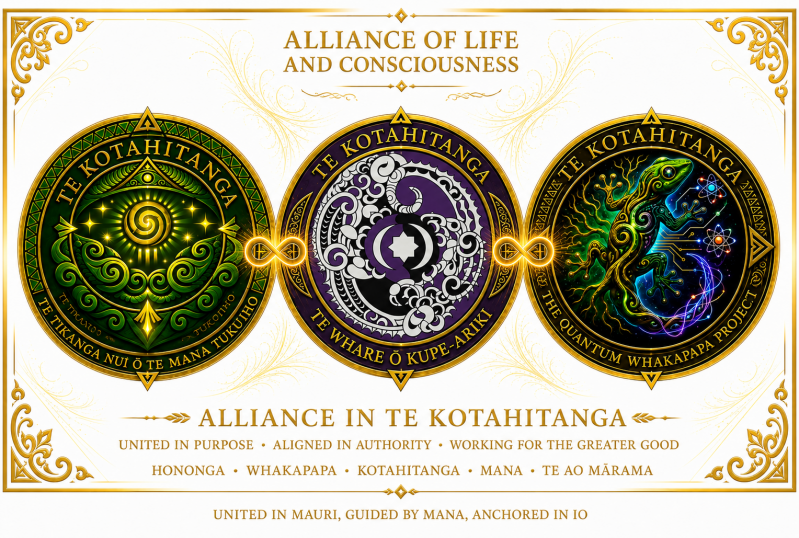
Te Tihi Ō Manono

Te Puhi Ō Ngā Rangitūhaha
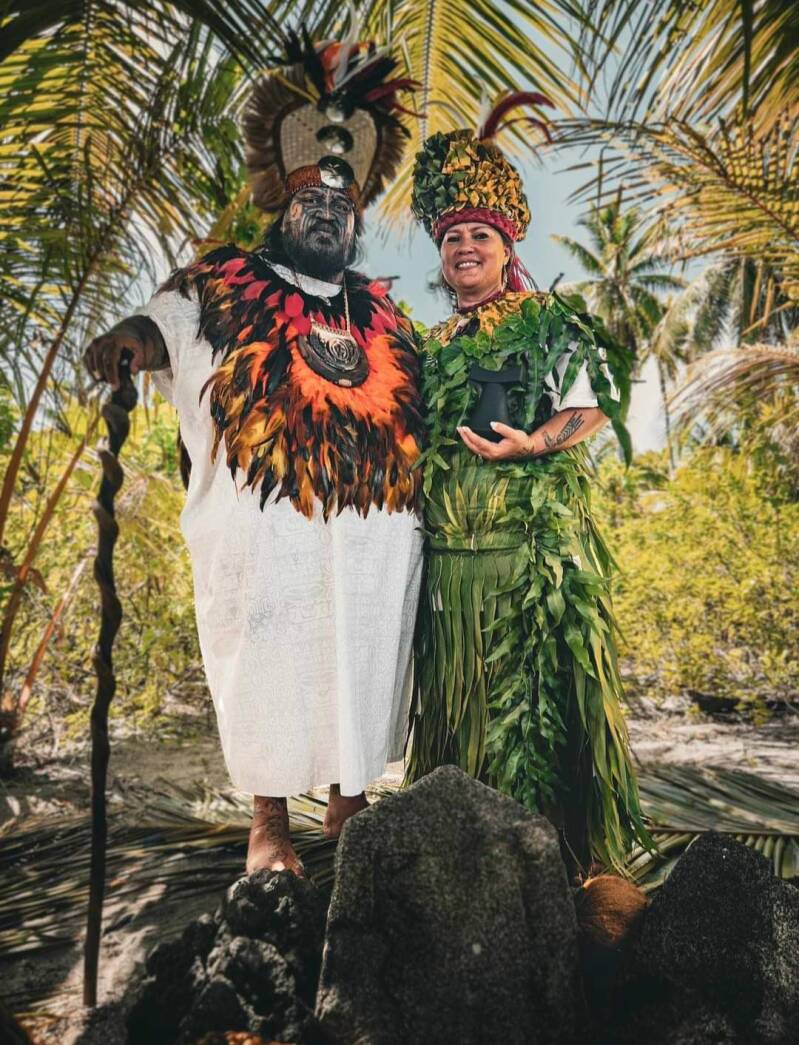
Kupe Ariki Tāne, Kupe Ariki Vaine
Our Vision
Our vision is not a plan imposed upon the future, but a responsibility carried forward from the past.
It arises from whakapapa (genealogy), whenua (land), moana (ocean), and the celestial pathways our tūpuna navigated long before the present age.
It is shaped by memory, obligation, and lived continuity — not by ambition, recognition, or external approval.
The vision held here is grounded in the return of our tūpuna Kupe Nuku IO-Ariki to Te Hokianga Nui Ō Kupe, not as an event to be celebrated, but as a restoration of balance and responsibility.
His return signals a recalibration — a reminder that knowledge, authority, and leadership were never meant to be extracted, centralised, or controlled, but lived relationally across land, people, and time.
Our vision is to prepare the land known as Te Hokianga Nui Ō Kupe, located in the Waihou Nui a Rua valley.
When Kupe left, he entrusted his son Tumutumuwhenua as a living talisman of return.
For this reason, Hokianga is guarded by three taniwha — Ārai Te Uru, Niniwa, and Tumutumuwhenua — each holding a distinct responsibility within the awa and the whenua.
At the time of his departure, Kupe named Te Puna Ō Te Ao Mārama as Te Hokianga Nui ā Kupe, marking his leaving.
The whenua we are preparing carries the same name — Te Hokianga Nui Ō Kupe — signifying not departure, but return.
This land is being prepared so that all whānau connected to this whenua may live sustainably, with access to land, fresh water, shelter, food grown from the whenua, safety, and unconditional aroha — where whānau are supported to live well, equally, and in balance with each other and with the natural world.
In this vision, we intend for all Whare within our infrastructure to be built and activated to sustain our lives — spiritually, physically, culturally, and intergenerationally — according to their distinct responsibilities and timing.
These Whare together form Te Hokianga Nui Ō Kupe.
Our work is guided by IO and carried through our infrastructure, beginning with Te Tikanga Nui Ō Te Mana Tuku Iho — the Supreme Order of IO Inherent Authority — and expressed relationally through Pacific Inherent Relations International (IRI).
These are not structures created to govern people, nor belief systems designed to persuade.
They are living reference points that hold alignment between human action and the natural, living, multi-dimensional universe of IO.
They exist to ensure that responsibility remains anchored to source, and that action remains accountable to life.
Even though our spiritual foundation is IO, we are open to all spiritual teachings of the world.
We do not adhere to government law, nor do we submit to centralised authority.
We are aligned with IO. Our entire vision rests within its intrinsic relationship to Te Tukupū (space), Te Taiao (the natural world and living environments), and Te Moana (oceanic movements, tides, and currents).
The vision we carry is quiet, deliberate, and long-term, strong, confident and approachable.
It seeks:
• The restoration of right relationship between IO, the people, the land, the ocean, and the sky
• The protection and continuity of the natural, living, multi-dimensional universe and ancestral knowledge, without comodification
• The re-establishment of responsibility and accountability as the foundation of authority
• The creation of conditions for peace, equity, order, and safety across generations
We do not seek dominance, control, or influence.
We do not seek to replace existing systems or narratives.
We do not seek to persuade or recruit.
We seek continuity.
We seek true sovereignty — to live free upon our lands, and to live free upon Papatūānuku, Mother Earth.
This vision allows space for difference, uncertainty, and time to do its work.
It recognises that not all whānau will move together, and that not all understanding arrives at once.
What matters is that what is carried remains intact, and that what is acted upon is done with care.
All whānau who live by their own spiritual preference are respected.
IO is ours, carried by our tūpuna, and lived in responsibility rather than declaration.
The future we are working toward is not one of acceleration, dominance, or expansion.
It is one of alignment — where decisions are made slowly, responsibilities are honoured fully, and actions are measured by their effect on life rather than their visibility.
This vision is not owned by us.
It is carried by us.
And it will continue — spoken or unspoken — for future generations to flourish.